

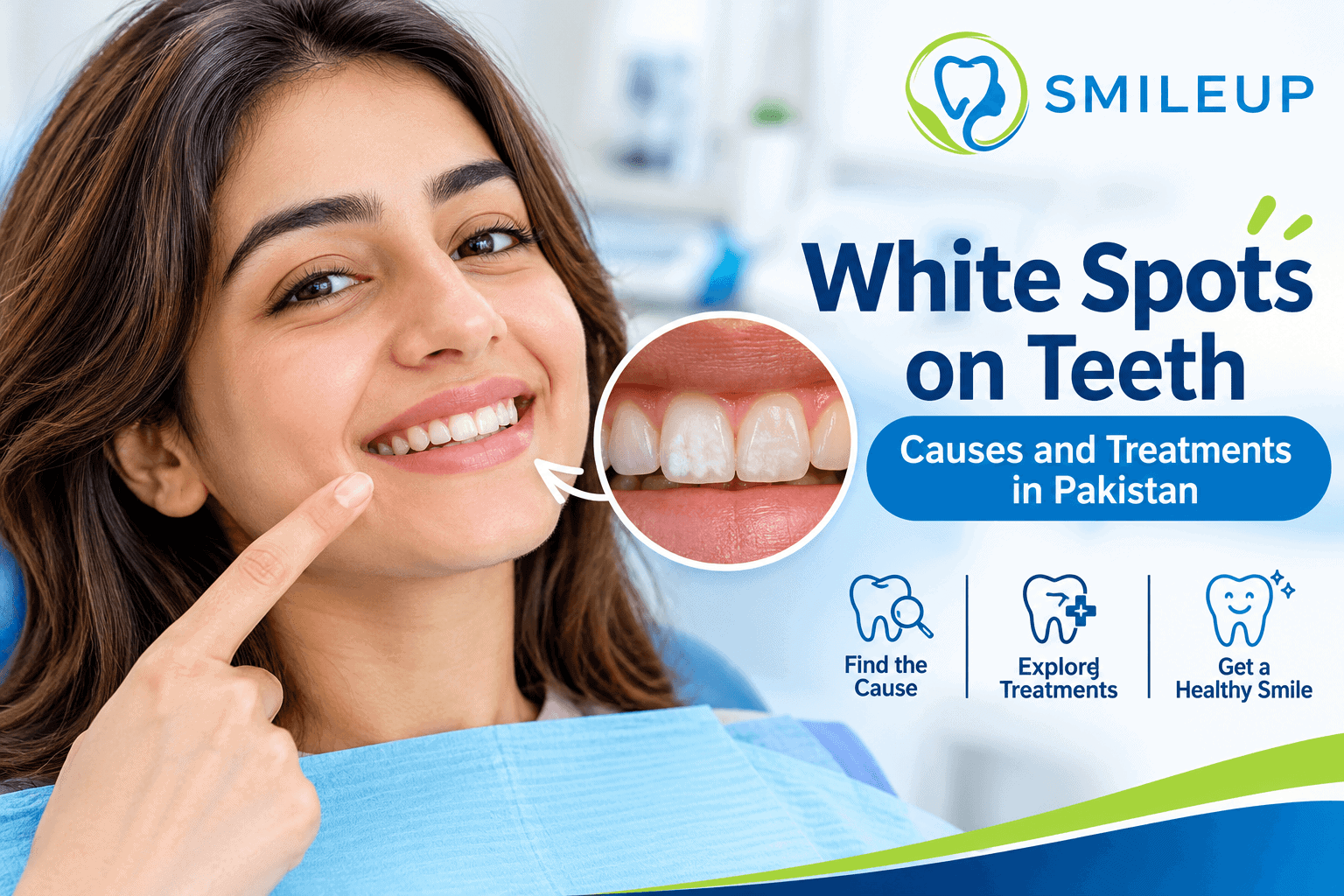
White spots on teeth can affect the appearance of your smile and sometimes indicate an underlying dental problem. You may notice small white patches, chalky marks or cloudy areas on your front teeth, especially when smiling or speaking. While these spots are not always harmful, they should not be ignored.
Many people in Pakistan experience white spots on their teeth due to enamel defects, early tooth decay, excessive fluoride exposure during childhood or poor oral hygiene. The good news is that several dental treatments can improve their appearance and protect your teeth from further damage.
In this guide, we explain the common causes of white spots on teeth, available treatment options and ways to prevent them.
What Are White Spots on Teeth?
White spots are areas where tooth enamel looks different from the surrounding surface. Healthy enamel usually has a smooth, slightly translucent appearance. However, when its mineral structure changes, certain areas may appear chalky, cloudy or noticeably white.
Read Also: Black Spots on Teeth: Are They Cavities or Just Stains?
One common cause is demineralisation. This happens when acids produced by bacteria remove important minerals, such as calcium and phosphate, from the enamel.
White spots can appear on one tooth or several teeth. Their size, colour and location often help dentists identify the underlying cause.
Importantly, some white spots are early signs of tooth decay, while others develop because of changes during tooth formation. a systematic review+1
Common Causes of White Spots on Teeth
Understanding the cause is the first step towards choosing the right treatment.
1. Poor Oral Hygiene
Not brushing and flossing properly allows plaque to collect on teeth. Bacteria in plaque produce acids that gradually remove minerals from enamel.
Over time, this mineral loss can create white, chalky patches. These marks commonly appear near the gumline and around areas that are difficult to clean.
2. Dental Fluorosis
Fluorosis develops when children consume excessive fluoride while their permanent teeth are forming. It can cause white lines, spots or cloudy patches on the enamel.
In some regions of Pakistan, naturally occurring fluoride levels in groundwater may vary. Excessive fluoride exposure during childhood can increase the risk of dental fluorosis.
Mild fluorosis usually causes cosmetic changes rather than functional problems.
3. White Spots After Braces
Orthodontic braces help straighten teeth, but brackets and wires can make brushing more difficult.
Food particles and plaque may collect around the brackets. If these areas are not cleaned properly, enamel can lose minerals, leaving noticeable white marks after braces are removed.
4. Enamel Hypoplasia and Hypomineralisation
Sometimes, enamel does not develop normally during childhood. This can result in areas that appear white, yellow or brown.
Enamel hypoplasia involves reduced enamel thickness, while hypomineralisation occurs when enamel does not develop its normal mineral strength.
These conditions may make teeth more sensitive and vulnerable to decay.
5. Early Tooth Decay
White spots can be the first visible sign of tooth decay. At this stage, the enamel may still be intact, but minerals have started to disappear.
Early diagnosis is important because some initial lesions can be treated without drilling or removing tooth structure. FDI World Dental Federation+1
Best Treatments for White Spots on Teeth in Pakistan
Treatment depends on the cause, depth and severity of the spots. A dentist will examine your teeth before recommending a suitable option.
1. Fluoride Treatment
Professional fluoride varnish or other dentist-recommended fluoride treatments can help strengthen enamel and encourage remineralisation.
This option is particularly useful for early white spot lesions caused by mineral loss. It can also help reduce the risk of further tooth decay.
2. Resin Infiltration
Resin infiltration is a minimally invasive cosmetic treatment for suitable white spot lesions.
During this procedure, a special liquid resin penetrates the porous enamel and helps reduce the visible difference between the affected area and surrounding tooth structure.
It can improve the appearance of white spots without traditional drilling or removing significant amounts of healthy enamel.
3. Dental Microabrasion
Microabrasion is a technique used to remove a very thin outer layer of enamel using specialised dental materials.
It may help reduce superficial white spots and certain enamel discolourations. A dentist must first assess whether the marks are suitable for this treatment.
4. Teeth Whitening
Professional teeth whitening may help improve overall tooth colour in selected cases. However, it does not remove the underlying cause of white spots.
In some situations, whitening can make white patches more noticeable temporarily. Your dentist should determine whether whitening is appropriate.
5. Dental Bonding or Veneers
For more noticeable or deeper enamel defects, cosmetic treatments may be considered.
Dental bonding uses tooth-coloured composite material to improve the appearance of affected teeth. Porcelain veneers may be suitable for selected cases where other treatments cannot provide the desired result.
These options require careful assessment because they may involve altering natural tooth structure. Nature+2
How to Prevent White Spots on Teeth
Good oral hygiene can reduce the risk of white spots caused by plaque and early enamel damage.
Follow these simple habits:
- Brush twice daily with fluoride toothpaste.
- Clean between your teeth using dental floss.
- Limit sugary foods, sweets and soft drinks.
- Drink enough water throughout the day.
- Clean carefully around braces and orthodontic appliances.
- Visit your dentist regularly for dental check-ups.
- Avoid using whitening products without professional advice.
Parents should also supervise children’s brushing habits and use age-appropriate fluoride toothpaste.
When Should You Visit a Dentist?
You should consult a dentist if you notice new white patches, increasing tooth sensitivity, rough enamel or changes in the appearance of your teeth.
Do not assume every white spot is harmless. Early tooth decay may look similar to other enamel conditions, but the treatments can be different.
A professional dental examination helps identify the cause and prevent further damage.
Get Professional Help for White Spots on Teeth at SmileUp
White spots on teeth do not always mean permanent damage. With early diagnosis and the right treatment, many cases can be managed successfully.
At SmileUp Dental Clinic, we believe every patient deserves a healthy and confident smile. Whether your white spots are caused by early decay, fluorosis or enamel defects, professional dental assessment can help you understand the available treatment options.
Book your dental consultation with SmileUp today and take the first step towards a healthier, brighter smile!