

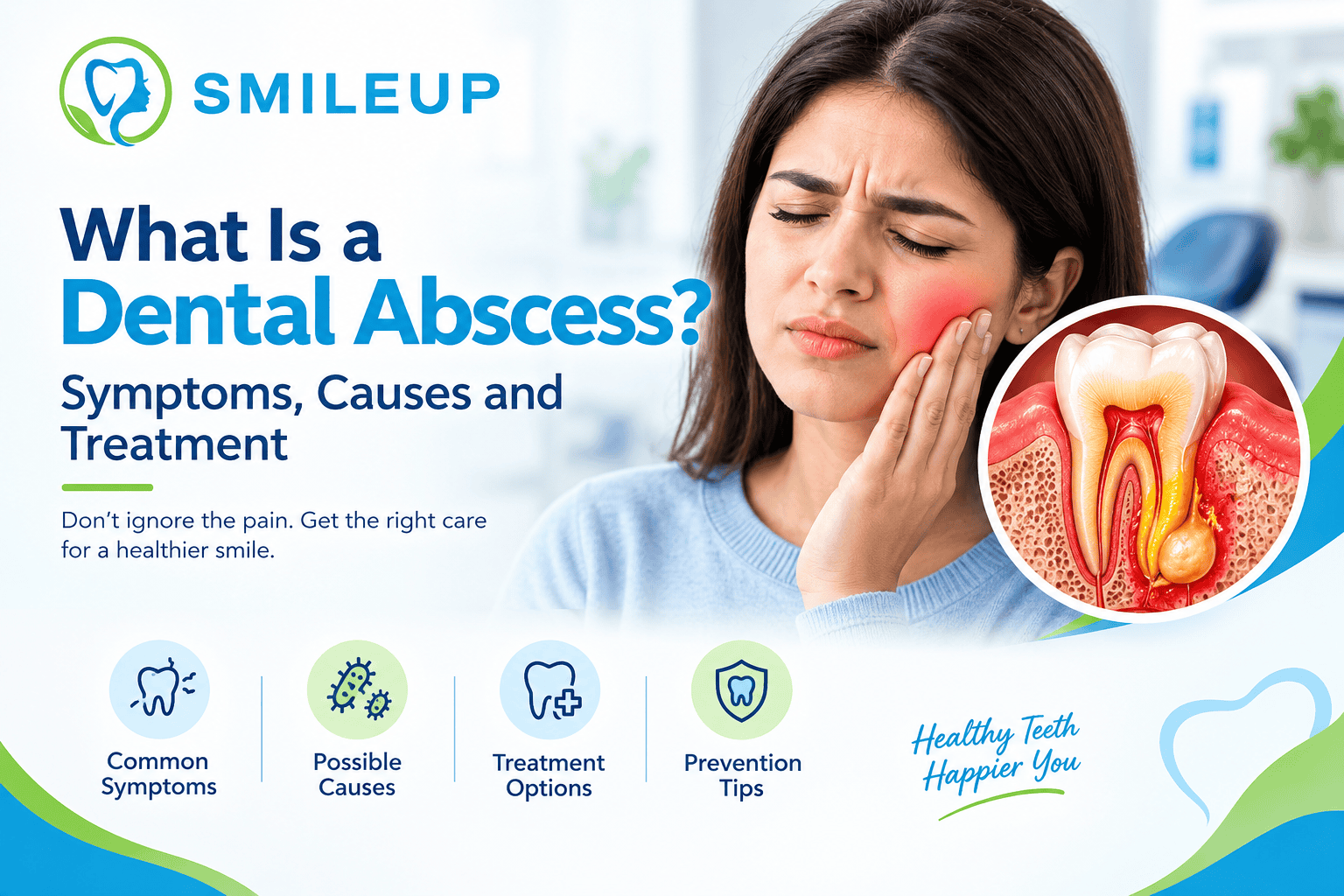
A toothache that does not go away can be more than just an inconvenience. Sometimes, it can be a sign of a dental abscess, a bacterial infection that causes a collection of pus around a tooth or in the surrounding gum tissue. Without proper treatment, the infection can spread and lead to serious complications.
Understanding the symptoms, causes, and treatment options can help you recognise the problem early and seek the right dental care.
What Is a Dental Abscess?
A dental abscess is a pocket of pus that forms because of a bacterial infection. It can develop when bacteria enter the inner part of a tooth or infect the surrounding gum tissue.
There are two common types of dental abscesses:
- Periapical abscess: This develops near the tip of a tooth’s root, often because of untreated tooth decay or damage to the tooth.
- Periodontal abscess: This develops in the gums, usually in association with gum disease or an infection around a tooth.
Both types require professional dental assessment. An abscess may cause severe pain and swelling, but sometimes the symptoms are less obvious.
Common Symptoms of a Dental Abscess
The symptoms can vary depending on the location and severity of the infection. Common warning signs include:
1. Persistent toothache: You may experience severe, throbbing pain that spreads to your jaw, ear, or neck.
2. Swollen gums or face: The affected gum may appear red and swollen. In more serious cases, swelling can extend to the cheek or face.
3. Sensitivity to hot and cold: An infected or damaged tooth may become sensitive to hot or cold food and drinks.
4. Bad breath or an unpleasant taste: Pus draining from an abscess can cause a bad taste in your mouth or persistent bad breath.
5. Fever and discomfort: Some people develop a fever, feel generally unwell, or notice swollen lymph nodes.
6. Pain when chewing: Biting or putting pressure on the affected tooth may become uncomfortable.
Not everyone experiences all these symptoms. Even if the pain suddenly improves, the infection may still be present.
What Causes a Dental Abscess?
A dental abscess usually develops when bacteria enter vulnerable areas of the tooth or gums. Several factors can contribute to the infection.
- Untreated tooth decay: Cavities can allow bacteria to reach the inner pulp of the tooth.
- Cracked or damaged teeth: Cracks can create an entry point for bacteria.
- Gum disease: Advanced gum disease can create pockets around teeth where bacteria accumulate.
- Failed dental restorations: Damaged fillings or crowns may allow bacteria to enter the affected tooth.
- Dental injuries: Trauma can damage the tooth and sometimes lead to infection.
Brushing twice daily with fluoride toothpaste, cleaning between your teeth, and attending regular dental check-ups can help reduce the risk of dental infections.
How Is a Dental Abscess Treated?
A dental abscess does not usually resolve permanently without appropriate treatment. A dentist will examine your teeth and gums and may recommend an X-ray to determine the extent of the infection.
Treatment depends on the cause and severity of the abscess.
1. Draining the Abscess
The dentist may drain the collection of pus to reduce pressure and help control the infection. This procedure should only be performed by a dental professional.
2. Root Canal Treatment
If the infection affects the pulp inside the tooth, root canal treatment may help save the tooth. The dentist removes the infected tissue, cleans the root canals, and seals the tooth.
3. Tooth Extraction
If the tooth is too damaged to be saved, extraction may be necessary to remove the source of infection.
4. Antibiotics When Necessary
Antibiotics may be prescribed when the infection is spreading or there are signs of systemic involvement. However, antibiotics alone generally cannot eliminate the source of a dental abscess. Dental treatment is still essential.
Your dentist will recommend the most suitable treatment based on your examination.
Can You Prevent a Dental Abscess?
Although not every dental abscess can be prevented, good oral hygiene can significantly reduce your risk.
Follow these simple habits:
- Brush your teeth twice a day with fluoride toothpaste.
- Clean between your teeth daily using floss or another suitable interdental cleaner.
- Limit frequent sugary snacks and drinks.
- Visit your dentist regularly for check-ups.
- Seek treatment for cavities, cracked teeth, and gum problems before they become more serious.
Early treatment can help protect your teeth and prevent avoidable complications.
When Should You See a Dentist?
Contact a dentist promptly if you have persistent tooth pain, swollen gums, pus around a tooth, or a bad taste that may indicate an infection.
Seek emergency medical care immediately if you develop difficulty breathing or swallowing, significant swelling of the mouth or neck, or swelling that affects the area around your eye. These symptoms can indicate a potentially dangerous spreading infection.
Do not try to squeeze or drain an abscess yourself, and do not rely on painkillers to treat the underlying infection.
Get Professional Dental Care at SmileUp
A dental abscess can be painful, but timely professional care can help control the infection and protect your oral health. Ignoring the symptoms may allow the problem to become more serious.
If you are experiencing tooth pain, gum swelling, or other signs of infection, contact SmileUp Dental Clinic in Pakistan to arrange a dental assessment. The dental team can evaluate your symptoms and recommend an appropriate treatment plan.
Do not ignore persistent tooth pain. Book a dental consultation with SmileUp and take the next step towards a healthier smile.