

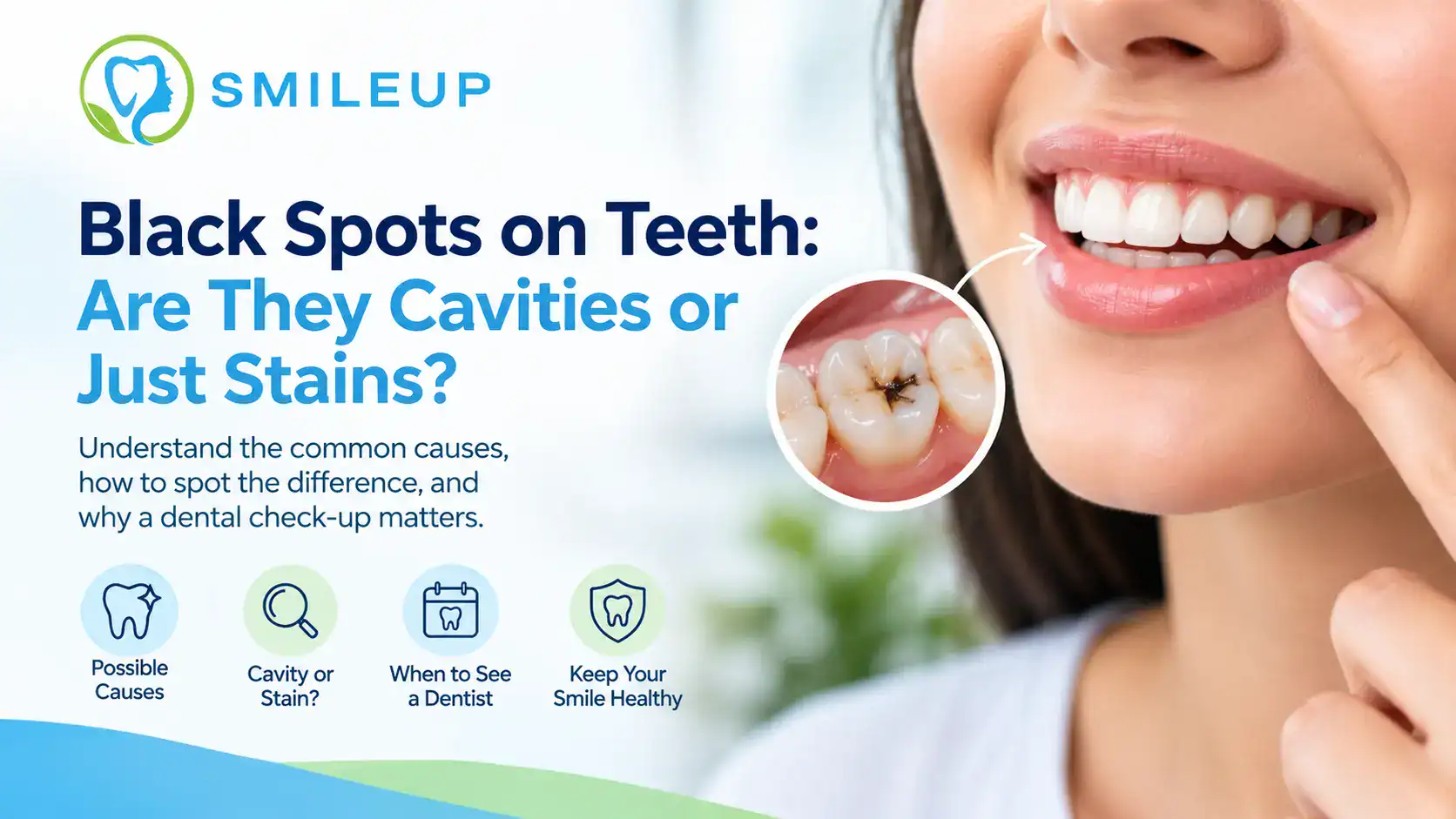
Have you noticed a small black spot on your tooth while brushing or looking in the mirror? You might think it is just a stain from tea, coffee, or your favourite foods. However, a dark spot can sometimes be an early warning sign of tooth decay.
The good news is that not every black spot means you have a cavity. Some spots are harmless surface stains, while others may indicate damage to your tooth enamel. The challenge is knowing the difference.
In this guide, we will explain the common causes of black spots on teeth, how to recognise possible signs of cavities, and why a dental examination is important for protecting your smile.
What Causes Black Spots on Teeth?
Black spots can develop for several reasons. Their appearance, location, and texture may offer clues, but only a dental examination can determine the exact cause.
Read Also: Is Root Canal Treatment Painful?
1. Tooth Decay and Cavities
One of the main causes of black spots on teeth is tooth decay. Your mouth contains bacteria that feed on sugars from food and drinks. These bacteria produce acids that gradually weaken the protective enamel covering your teeth.
As decay progresses, the affected area may turn brown or black. You might notice a tiny dark spot on a molar, a mark between two teeth, or a small hole in the tooth.
Early tooth decay may not cause pain or sensitivity. This means a cavity can develop without you noticing it. If the decay continues, it can reach the deeper layers of the tooth and cause discomfort, infection, or more serious damage.
What should you do? If you notice a new black spot, arrange a dental check-up rather than waiting for pain to appear.
2. Stains from Tea, Coffee, and Food
Do you drink tea or coffee regularly? These popular beverages can contribute to tooth staining over time. Other dark-coloured foods and drinks may also leave pigments on the enamel.
Surface stains can make teeth look brown or black, especially when plaque builds up around the gumline or between teeth. Unlike tooth decay, these stains do not necessarily mean the tooth structure has been damaged.
A dentist can examine the affected area and may recommend professional cleaning to remove surface stains.
Remember, even if you regularly brush your teeth, some stains can remain in difficult-to-reach areas.
Read also: How Long Does Professional Teeth Whitening Last?
3. Plaque and Tartar Buildup
Plaque is a sticky layer of bacteria that forms on your teeth throughout the day. When you do not remove it properly, it can harden into tartar, also called dental calculus.
Tartar can collect near the gumline and sometimes appear yellow, brown, or black. Certain types of dark staining may also develop along the gumline.
Unlike soft plaque, hardened tartar cannot be removed safely with ordinary brushing alone. A dental professional can remove it using appropriate cleaning techniques.
Regular brushing, daily cleaning between your teeth, and professional check-ups can help reduce plaque and tartar buildup.
4. Smoking and Tobacco Use
Smoking and chewing tobacco can leave stubborn brown or black stains on teeth. Tobacco use can also contribute to plaque buildup and increase the risk of gum disease.
Although tobacco-related staining may affect the appearance of your smile, it is important not to assume every dark spot is simply a stain. A dentist should examine any suspicious or changing area.
Avoiding tobacco can help protect your oral health and reduce further staining.
5. Old Dental Fillings or Tooth Injuries
Sometimes, a tooth becomes darker because of an old filling, previous dental treatment, or an injury.
For example, trauma can damage the inner tissues of a tooth and cause it to turn grey or dark over time. Changes around an existing filling may also affect the tooth’s appearance.
If a single tooth becomes darker without an obvious reason, arrange a dental assessment. Your dentist can determine whether the change is related to staining, previous treatment, decay, or damage inside the tooth.
Read Also: 7 Signs Your Mouth Is Trying to Tell You Something Is Wrong
Black Spots on Teeth: How Can You Tell If It Is a Cavity?
It is not always easy to distinguish a cavity from a surface stain just by looking in the mirror. However, a few signs can help you understand when to seek dental care.
Possible signs of a cavity include:
- A dark spot that appears to be getting bigger.
- A visible hole or rough area on the tooth.
- Sensitivity when eating sweet foods or drinking something hot or cold.
- Pain when biting or chewing.
- Food getting trapped in the same area repeatedly.
Signs that may suggest surface staining include:
- Dark marks appearing on several teeth.
- Discolouration near the gumline.
- Stains associated with frequent tea, coffee, or tobacco use.
- No obvious hole or discomfort.
These signs are only clues, not a reliable diagnosis. Some cavities cause no pain, and some stains can appear on just one tooth. A dentist may examine your teeth and recommend dental X-rays if needed to identify decay that is not visible on the surface.
Why You Should Not Ignore Black Spots on Teeth
A small dark spot may seem like a minor cosmetic issue, but ignoring it can allow an underlying problem to progress.
If the spot is caused by tooth decay, the damage may spread deeper into the tooth. Treatment can become more complex if the decay reaches the inner pulp, where the nerves and blood vessels are located.
Depending on the cause and severity, your dentist may recommend:
- Professional cleaning: To remove plaque, tartar, and certain surface stains.
- Fluoride treatment: To help strengthen enamel and manage suitable early-stage decay.
- Dental filling: To repair a cavity where tooth structure has been damaged.
- Root canal treatment: If decay or infection has reached the pulp.
- Other treatment: If the tooth has suffered an injury or has a problem with an existing restoration.
The right treatment depends on the diagnosis. Early assessment can help you avoid unnecessary discomfort and more extensive dental procedures.
How to Prevent Black Spots on Teeth
Good oral hygiene can help prevent tooth decay and reduce many types of surface staining. Make these simple habits part of your daily routine.
1. Brush twice a day. Use a soft-bristled toothbrush and fluoride toothpaste. Brush gently for about two minutes, covering all tooth surfaces.
2. Clean between your teeth daily. Use dental floss or interdental brushes to remove plaque and food particles from areas your toothbrush cannot reach easily.
3. Limit frequent sugary snacks and drinks. Repeated exposure to sugar increases the risk of tooth decay. Choose water more often and keep sugary treats to mealtimes where possible.
4. Rinse with water after dark-coloured drinks. Drinking water after tea or coffee can help wash away some residue, although it will not remove every stain.
5. Avoid tobacco. Tobacco can stain teeth and increase the risk of serious oral health problems.
6. Schedule regular dental check-ups. Your dentist can identify developing cavities, remove hardened tartar, and recommend care based on your needs.
Avoid scraping black spots with sharp objects or using harsh household ingredients to whiten your teeth. These methods can damage enamel and irritate your gums.
When Should You Visit a Dentist?
Book a dental appointment if you notice a new black spot, a mark that changes in size, or a dark area that does not disappear with normal brushing.
Seek prompt dental care if you also experience toothache, persistent sensitivity, swelling, or pain when chewing. Facial swelling with fever or difficulty swallowing or breathing requires urgent medical attention.
Even if the spot does not hurt, it is worth having it checked. Tooth decay can develop silently, so the absence of pain does not guarantee that your teeth are healthy.
Conclusion
Black spots on teeth can result from surface stains, plaque, tartar, tooth decay, old dental work, or previous injuries. While some causes are relatively simple to treat, others require prompt dental care.
The best way to know whether a dark spot is a cavity or just a stain is to have your teeth examined by a dental professional. Avoid guessing or trying to remove the spot yourself.
Protect your smile with SmileUp. If you have noticed black spots on your teeth or are concerned about possible cavities, book a dental consultation to understand the cause and explore the right treatment for your needs. Early attention can help you maintain healthier teeth and a confident smile.